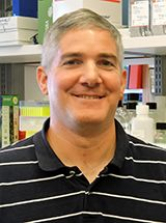
Associate Professor of Pathology and Laboratory Medicine at Children's Hospital of Philadelphia
Perelman School of Medicine at the University of Pennsylvania
Director, Division of Genomic Diagnostics
Children's Hospital of Philadelphia (CHOP)
Contact Information
Children’s Hospital of Philadelphia
Department of Pathology and Laboratory Medicine
Abramson Pediatric Research Center, Rm. 716C
3615 Civic Center Blvd.
Philadelphia, PA 19104
Tel: 267-426-7885
Email: conlinl@email.chop.edu
More Info
Professor of Pathology and Laboratory Medicine
Professor of Medicine
Perelman School of Medicine at the University of Pennsylvania
Attending Physician, Coagulation Laboratory
Contact Information
Perelman School of Medicine at the University of Pennsylvania
Department of Pathology and Laboratory Medicine
Stellar-Chance Laboratories, Rm. 513A
422 Curie Blvd.
Philadelphia, PA 19104
Email: dcines@pennmedicine.upenn.edu
Research Expertise
Thrombosis, fibrinolysis, vascular biology, immunohematology
Clinical Expertise
Coagulation, immune hematological disorders
More Info
Professor of Pathology and Laboratory Medicine
Perelman School of Medicine at the University of Pennsylvania
Contact Information
Children's Hospital of Philadelphia
Department of Pathology and Laboratory Medicine
Abramson Pediatric Research Center, Rm. 816D
3615 Civic Center Boulevard
Philadelphia, PA 19104
Tel: 267-426-5410
Fax: 267-426-5165
Email: jburkhar@pennmedicine.upenn.edu
Research Expertise
Regulation of cytoskeletal dynamics in T cells and dendritic cells, and cytoskeletal control of the immune response
More Info
Research Professor of Pathology and Laboratory Medicine
Perelman School of Medicine at the University of Pennsylvania
Director of Drug Discovery
Center for Neurodegenerative Disease Research
Contact Information
Center for Neurodegenerative Disease Research
Perelman School of Medicine at the University of Pennsylvania
Maloney Building, 3rd Floor
3600 Spruce Street
Philadelphia, PA 19104
Tel: 215-615-5262
Email: kbrunden@upenn.edu
Drug discovery and development, neurobiology, biochemistry and pharmacology
More Info
Professor of Pathology and Laboratory Medicine
Perelman School of Medicine at the University of Pennsylvania
Contact Information
Children’s Hospital of Philadelphia
Colket Translational Research Building, Rm. 4054
3501 Civic Center Boulevard
Philadelphia, PA 19104
Tel: 267-426-0311
Email: bassing@pennmedicine.upenn.edu
Research Interests: Elucidate genetic, epigenetic, and biochemical mechanisms by which mammals develop their immune systems while suppressing autoimmunity and genomic aberrations that cause leukemia or lymphoma.
More Info
Barbara and Edward Netter Professor in Cancer Gene Therapy
Perelman School of Medicine at the University of Pennsylvania
Founding Director, Clinical Cell and Vaccine Production Facility (CVPF)
Contact Information
Center for Cellular Immunotherapies
Smilow Center for Translational Research, Rm. 8-114
3400 Civic Center Boulevard
Philadelphia, PA 19104
Tel: 215-898-9120
Email: levinebl@pennmedicine.upenn.edu
Cell, gene, and biologic therapy clinical trial development, manufacturing, and testing and lymphocyte growth, activation, and homeostasis
More Info
Professor of Pathology and Laboratory Medicine
Perelman School of Medicine at the University of Pennsylvania
Vice Chair for Faculty Development and Academic Affairs
Department of Pathology and Laboratory Medicine
Contact Information
Department of Pathology and Laboratory Medicine
Perelman School of Medicine at the University of Pennsylvania
John Morgan Building, Rm. 230
3620 Hamilton Walk
Philadelphia, PA 19104
Office: 215-746-5547
Fax: 215-573-2350
Email: dallman@pennmedicine.upenn.edu
Research Interests:
Plasma cell differentiation, B cell development
More Info
The Department of Pathology and Laboratory Medicine has a long history of supporting both clinical and translational research. In addition, the wide scope of expertise of its faculty is available to provide support for scientific research projects, as participants in diagnostic procedures or infusional therapeutics, as consultants, or as co-investigators.
Research at Penn
Translational and basic-science research in the Department of Pathology and Laboratory Medicine at Penn is conducted in many areas, including Autoimmunity and Allergy, Bioinformatics, Cancer Biology, Cell Biology and Signal Transduction, Developmental Mechanisms, Developmental, Stem Cell, & Regenerative Biology, Diagnostic Innovation, Experimental Therapeutics, Gene Therapy and Vaccines, Genetics and Gene Regulation, HIV, Immune Health, Immunology and Immunobiology, Immunotherapy, Microbiology, Neurodegenerative Diseases, Proteomics, Recombination, Class Switching, DNA Repair.
Highlights
Research Summary
Research in the Department of Pathology and Laboratory Medicine at Penn is one of the three core missions and encompasses many areas of expertise. Major focused strengths and scientific synergies have emerged within the Department in recent years, and as such, the Department’s research efforts have been organized into three broadly defined scientific divisions: the Division of Cancer and Immunobiology, the Division of Neuropathology/Neurodegeneration, and the Division of Diagnostic Innovation.
With a longstanding research focus on fundamental biophysical aspects of diseases, the Department is one of the few places where the basic science divisions and clinical practices are still linked, thus bridging the medical school and health services. Resulting advantages to both include providing resources, intellectual and financial; fostering translational research; ensuring that basic science observations are applied towards patient treatment and diagnosis; and establishing accessibility and dialogue between clinicians and basic scientists. As part of the Raymond and Ruth Perelman School of Medicine at the University of Pennsylvania, the Department is consistently among the nation's top recipients of funding for biomedical research from the National Institutes of Health (NIH).
Research Initiatives
- intracellular signaling
- molecular mechanisms of leukemogenesis and sarcomagenesis, with special emphasis on aberrant transcriptional factors; RNA pathobiology
- cellular development, such as lymphocyte, melanocyte, and bone development
- endothelial cell and platelet pathobiology
- metastasis and behavior of cells in situ and in three-dimensions
- proteomics and protein modeling
- emerging infectious diseases, including HIV
- neurodegenerative mechanisms
- experimental therapeutics
Pages